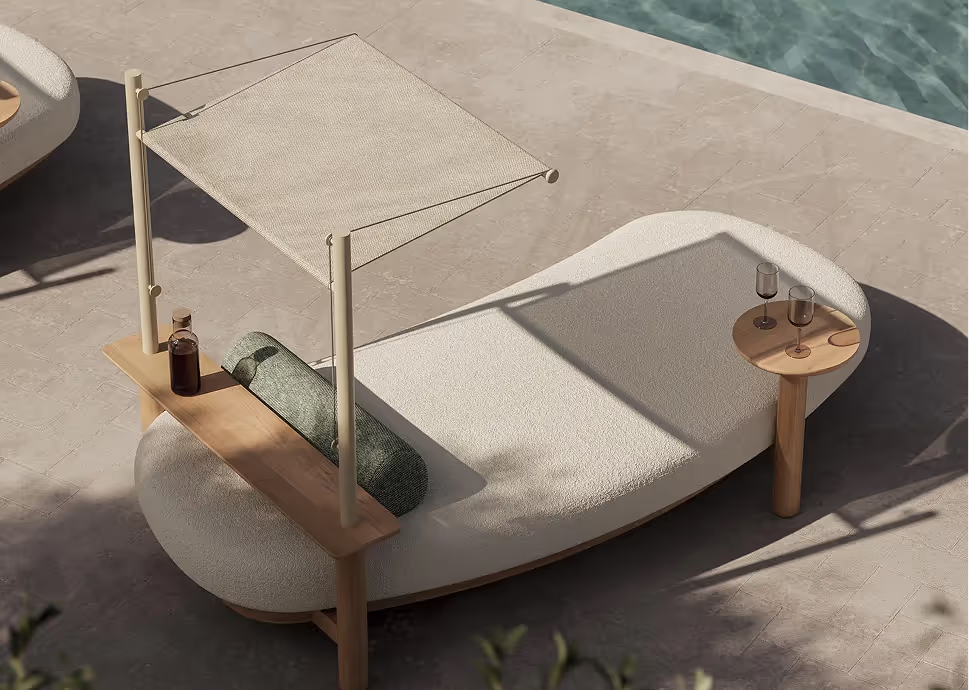
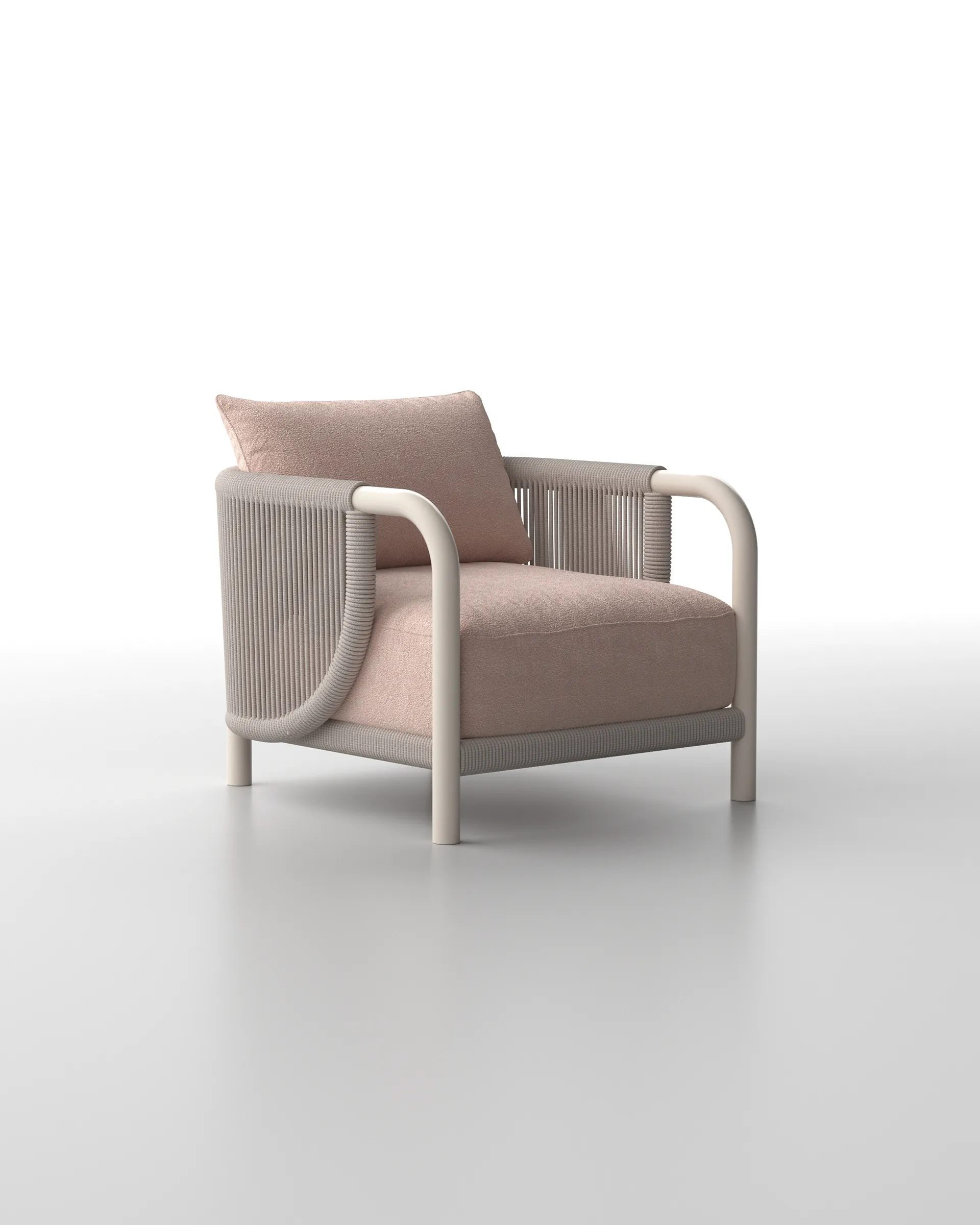
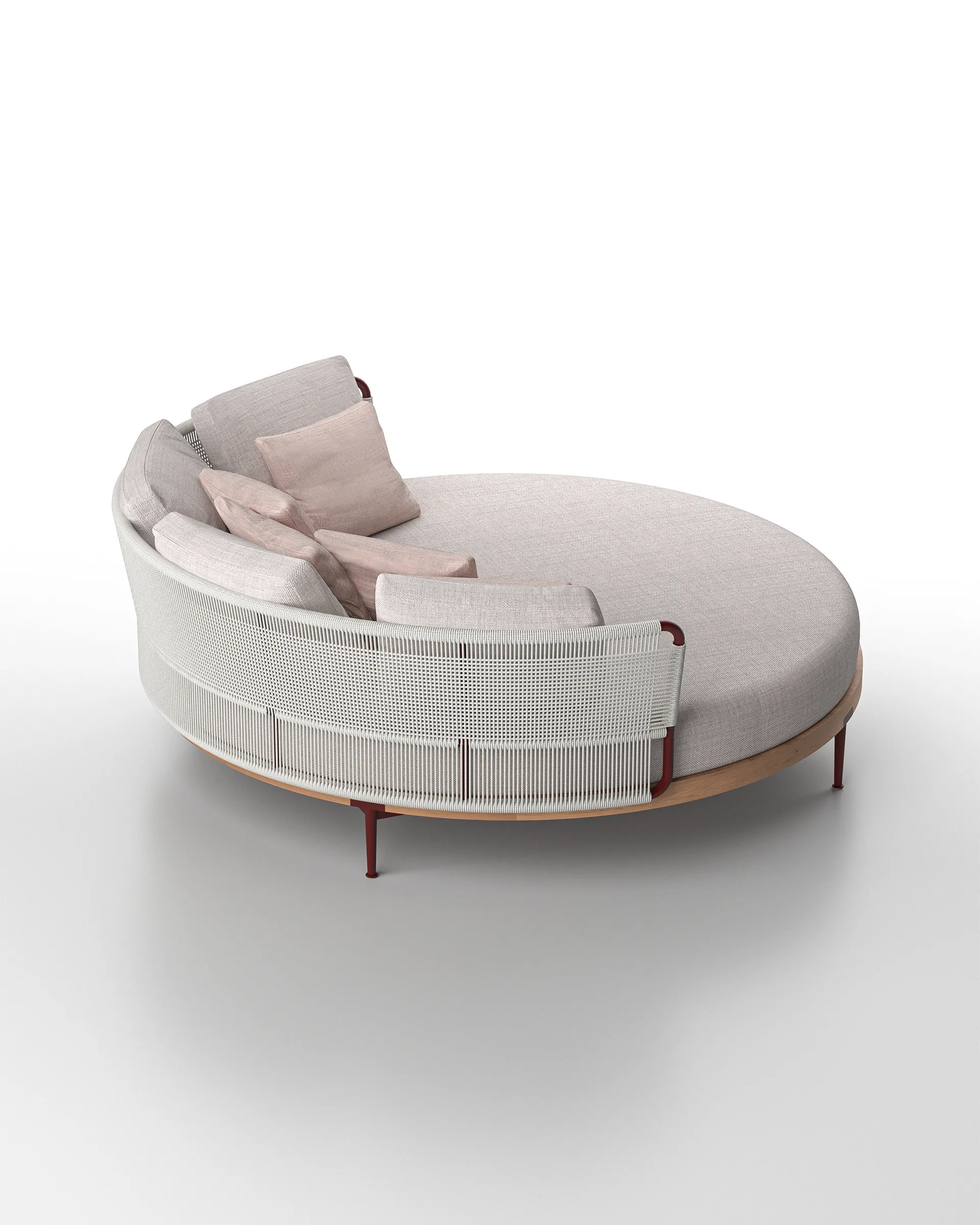
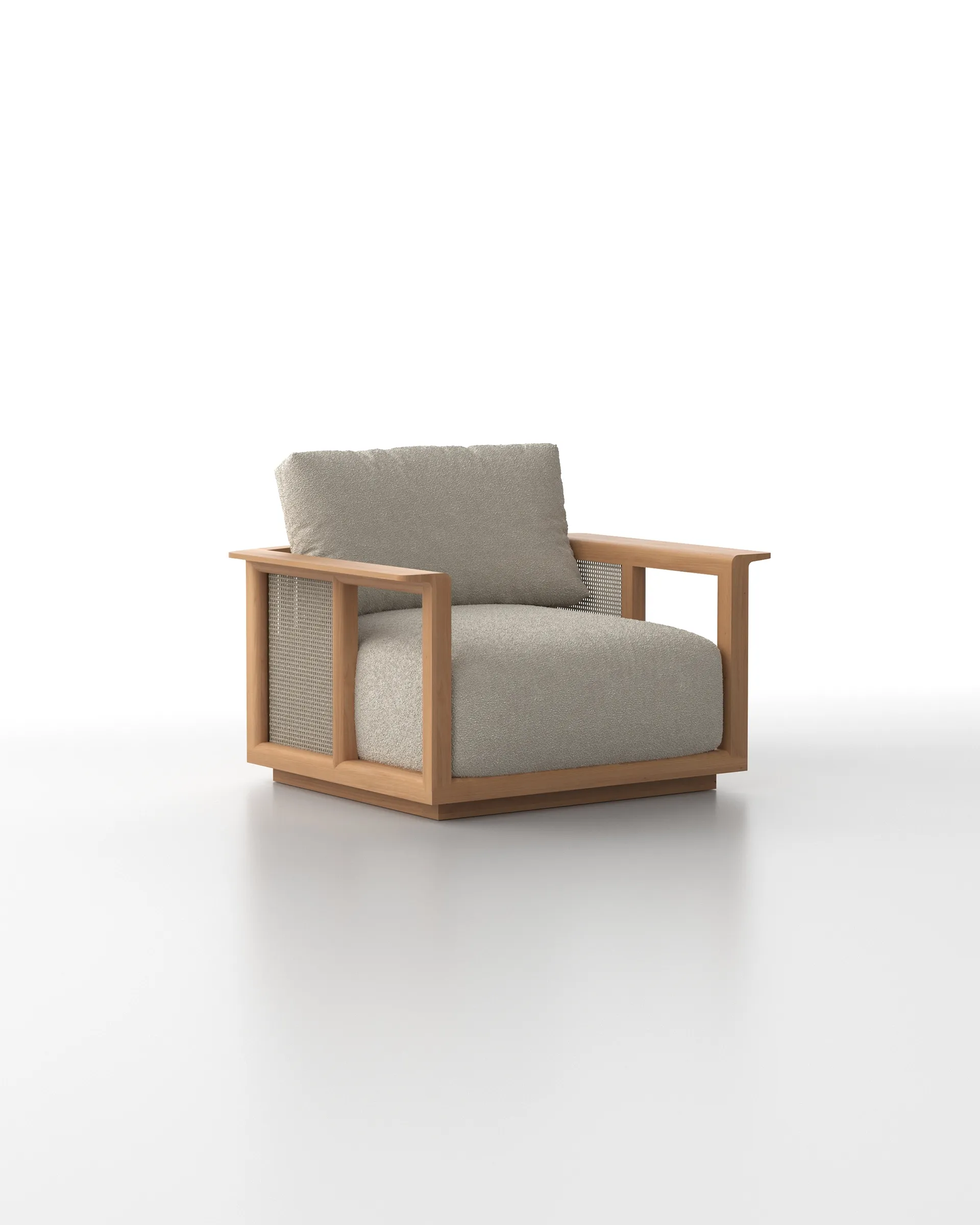
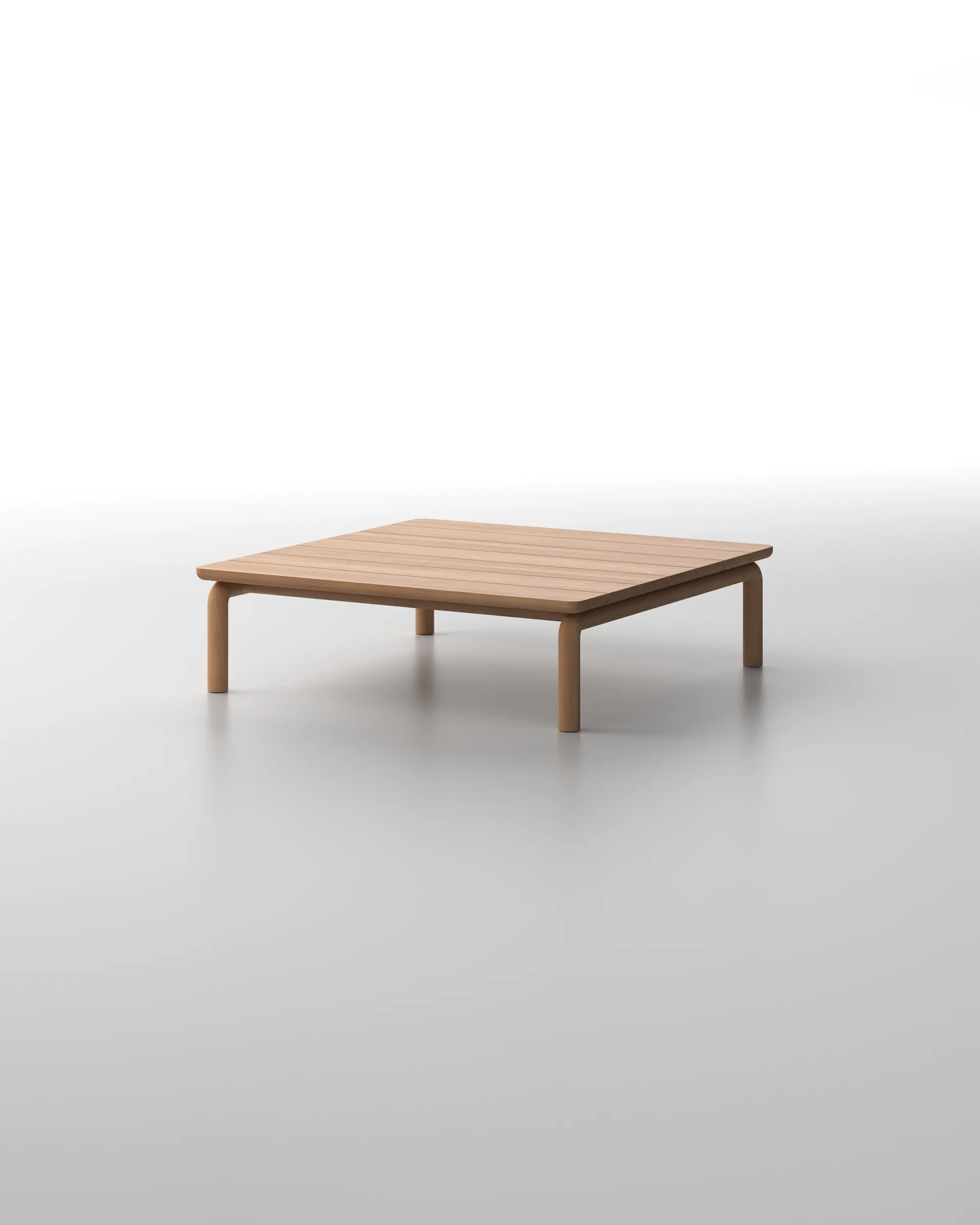
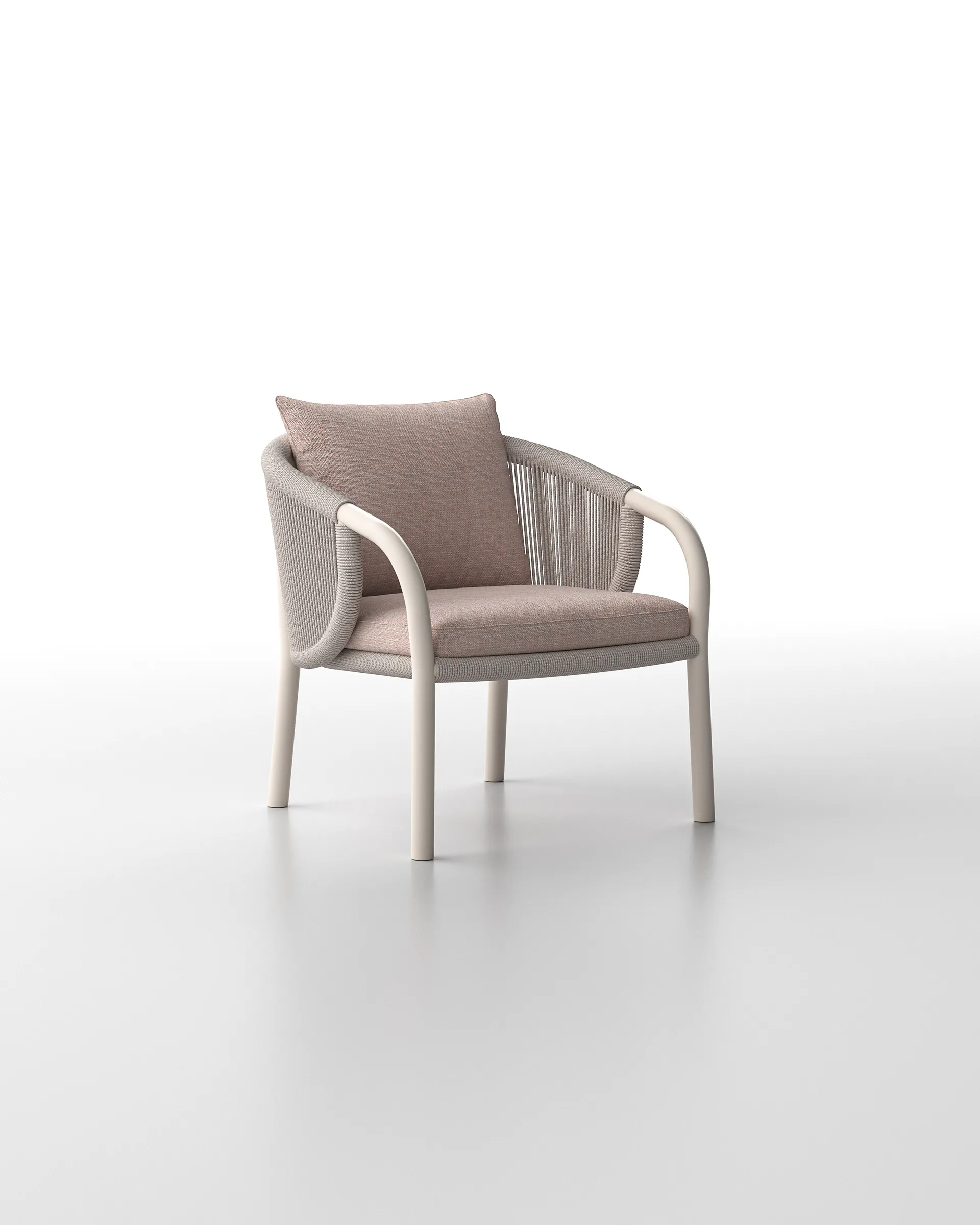
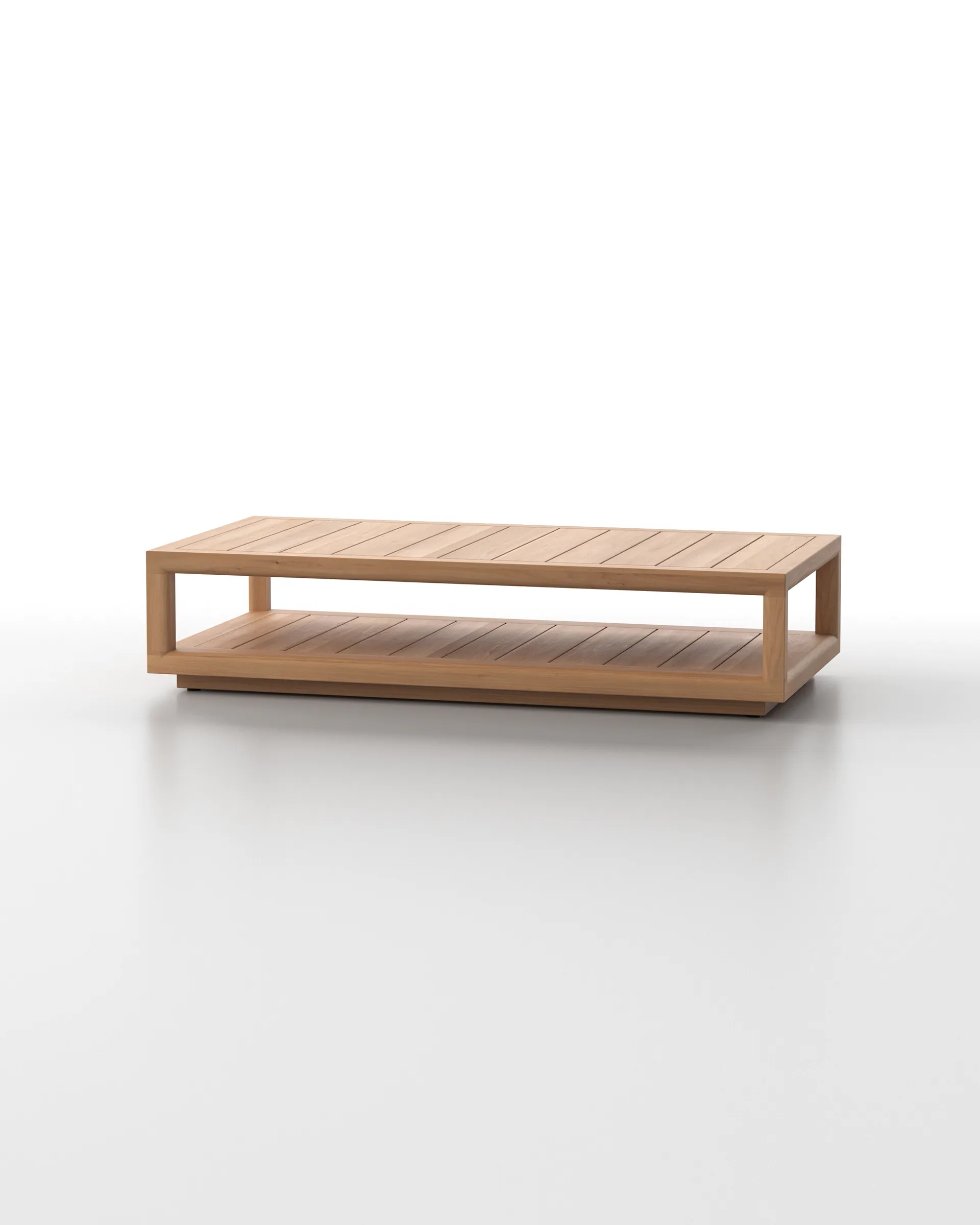
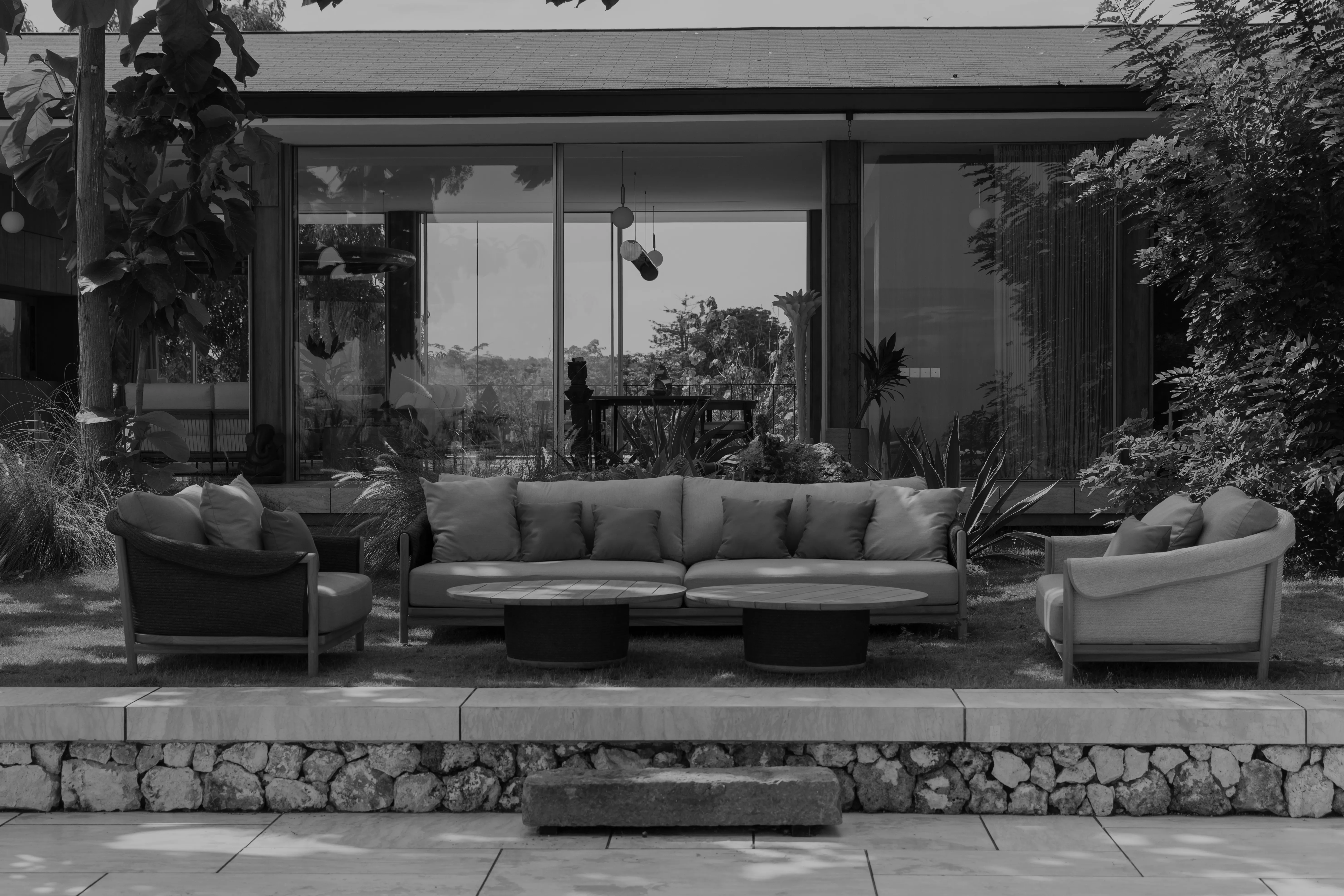
On a beach in Bali, we built the entire interior of the TenuNYamaN pavilion — a showcase by Häfele and VIRO. They wove the shell; we made everything that lives inside it. Every door, every cabinet, every chair came out of our own workshop, and as always, it all started with teak wood for furniture. Building a whole room like that is a reminder of something simple: the quality of a piece of teak furniture doesn’t end with the wood — the hands that shape it matter just as much.
So this guide doesn’t stop at the wood either. When people search for teak wood for furniture, most of what they find stops at the grain, the golden colour, and the price per cubic metre. Here we cover the whole picture — what makes teak the benchmark for fine furniture, how to tell quality apart, and why the way a piece is built matters as much as the wood inside it.
What makes teak wood ideal for furniture
Teak (Tectona grandis) earns its reputation from its own chemistry, not from marketing. The heartwood carries a high level of natural oils and silica, and a dense, tight grain. Together these give teak three qualities that most timbers can only imitate: it resists water, it resists rot, and it resists insects — all without chemical treatment.
That is why teak wood for furniture has been trusted for centuries, from ship decks to garden benches. The same oils that repel moisture also keep the wood dimensionally stable, so a well-made teak piece won’t warp, crack, or swell through wet and dry seasons. Left outdoors and untreated, teak weathers to a soft silver-grey — a change in colour, not in strength.
Not all teak is the same, and the word “teak” alone tells you very little. Quality comes down to three things.
Heartwood vs sapwood. The heartwood — the dense core of the tree — holds nearly all of teak’s natural oils. The paler sapwood at the outer edge has far less, and far less durability. Premium furniture uses heartwood almost exclusively.
Grade A, B, or C. The top grade is mature heartwood with even colour and high oil content. Grade B mixes in some outer wood, giving more colour variation. Lower still, Grade C includes sapwood and knots. Whatever you pay for should match what you receive.
Moisture content. Teak needs to be properly kiln-dried before it becomes furniture — usually to around 8–12% moisture. Wood that is dried too fast or not enough will move after it reaches you.
Because teak performs where other woods fail, it moves easily between settings. Indoors, it brings warmth and a grain that only deepens with age. Outdoors, it is one of the few timbers that can stay uncovered year-round — one of the best materials for sun durability — which is why teak outdoor furniture remains the standard for terraces, pool decks, and gardens.
The demands rise again in commercial settings. Teak furniture for hotels and resorts has to survive salt air, constant sun, and daily use by hundreds of guests — while still looking considered. That combination — resilience that reads as calm — is exactly what makes teak the material of choice for hospitality interiors, and a first choice when choosing dining table materials for commercial outdoor spaces. This is where the difference between an ordinary piece and a lasting one becomes impossible to hide.
Made, not sourced: why craftsmanship matters as much as the wood
This is the part most buying guides skip. Two workshops can start with the exact same grade of teak, yet the finished pieces can turn out very differently. The wood sets the maximum; the making decides whether you reach it.
What separates them are small details. Joinery: joints cut to lock together stay solid twenty years on; ones merely glued and screwed do not. Finishing decides how the grain reads and how the surface ages. Consistency decides whether every piece in a set truly matches.
This is where sourced and made part ways. Sourced furniture is bought ready-made from whoever has stock. Made furniture is built by one team accountable for the whole result. When a piece is built in-house from raw teak to final finish, no part of it is handed to a supplier you’ll never meet. That full control is the real luxury — and it is what we mean when we say made, not sourced.
Case study: the TenuNYamaN pavilion at JIA CURATED
The pavilion we opened with is the clearest way to show this. At JIA CURATED in Bali, we served as main interior contractor for the TenuNYamaN pavilion — a showcase by Häfele and VIRO. They wove the shell: thatch, charred timber, a woven form curling up through its middle. Everything inside it was ours.
We built the doors, the cabinetry, and the furniture in-house: four custom teak furniture collections, placed as they would live in a home rather than staged for a booth. Marie took the dining table and lounge downstairs, Lena the kitchen island; upstairs, Arpa opened onto the rooftop and Badia settled into a quiet corner. Four collections, one teak, one team behind all of it.
It is the same standard behind our hospitality projects for clients across Asia Pacific and beyond — the pavilion simply made it visible in a single room.
The four teak finishes, and what they mean
The same teak can wear four different characters. At the pavilion, we set out chess sets and puzzles in all four so visitors could hold the difference — the fastest way to understand teak is to feel it in the hand.
Natural — teak left close to its raw state, warm and golden, ageing gracefully over time.
Protected — sealed to hold its original colour and guard against staining, ideal for high-use surfaces.
Weathered — teak taken to its silver-grey patina from the start, for a lived-in, coastal look.
Black — a deep, contemporary tone that lets the grain read as texture rather than colour.
None of these change what the wood is. What changes is how it meets the room — and that, again, is the maker’s decision, not the tree’s.
The best way to understand all of this isn’t to read it — it’s to touch it. The TenuNYamaN pavilion, its entire interior built by us, is at JIA CURATED, 13–17 August 2026, Event Area B No. 45, Pengembak Beach, Sanur. Sit down, and turn over one of our teak chess pieces; the joinery says more than we could write.