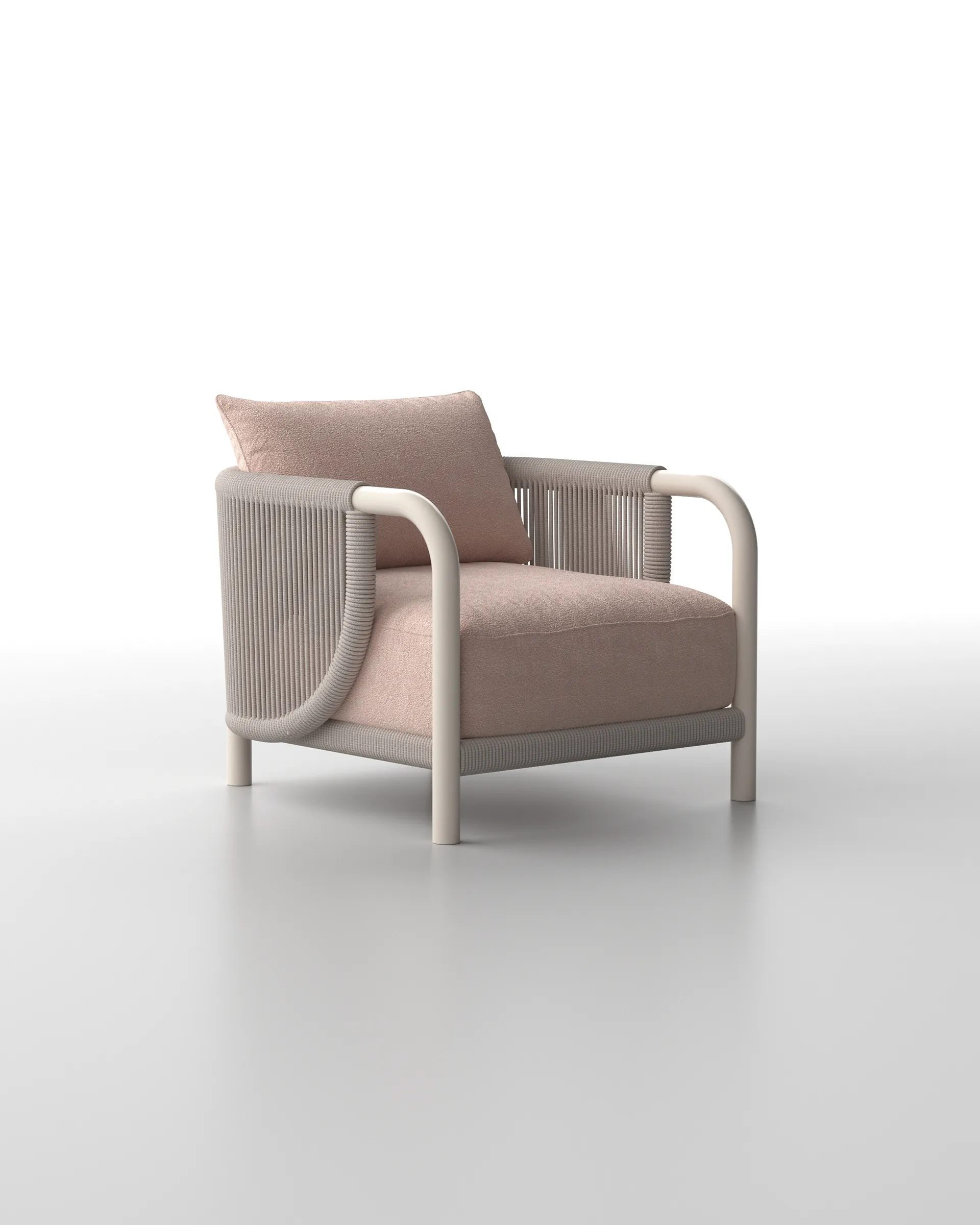
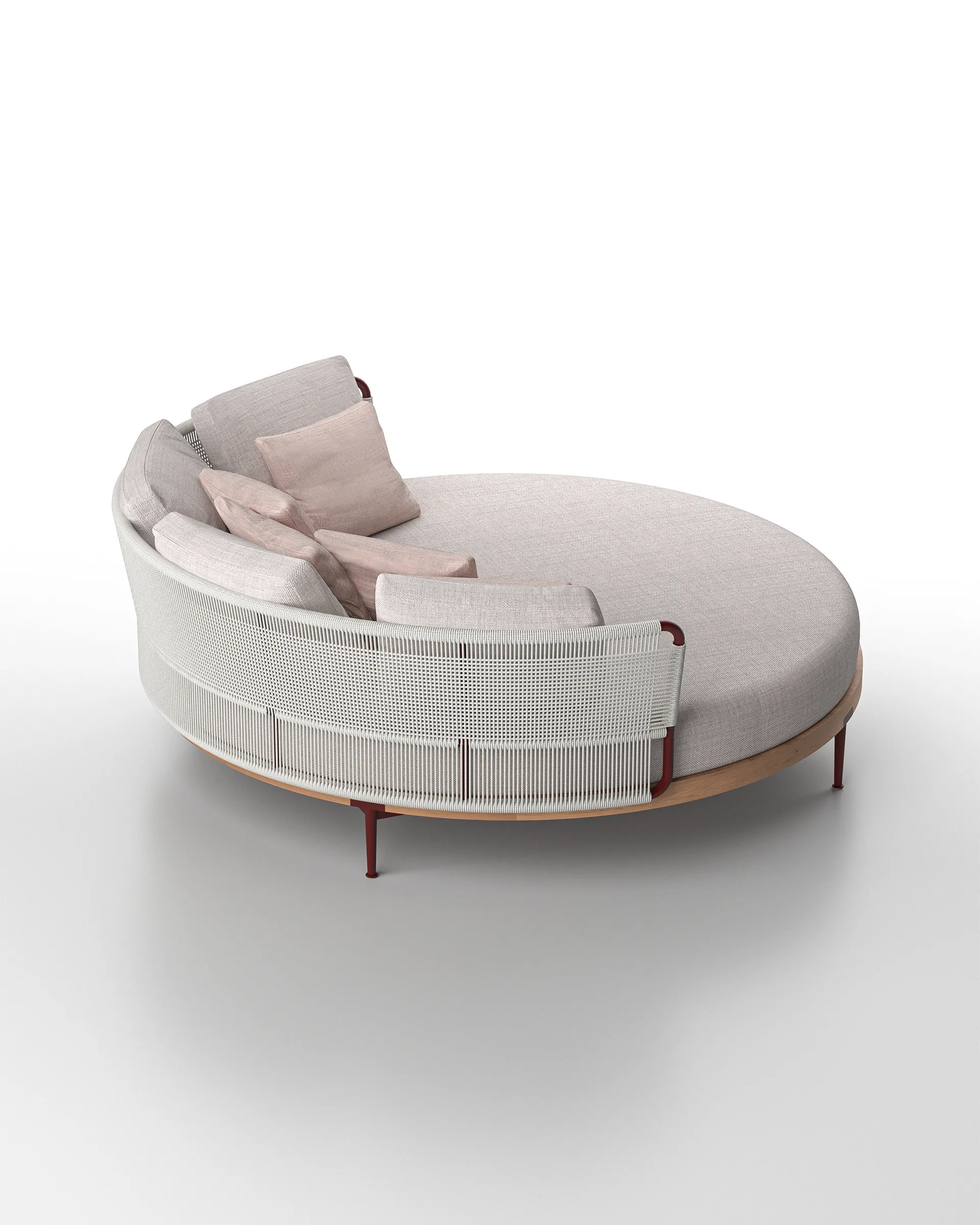
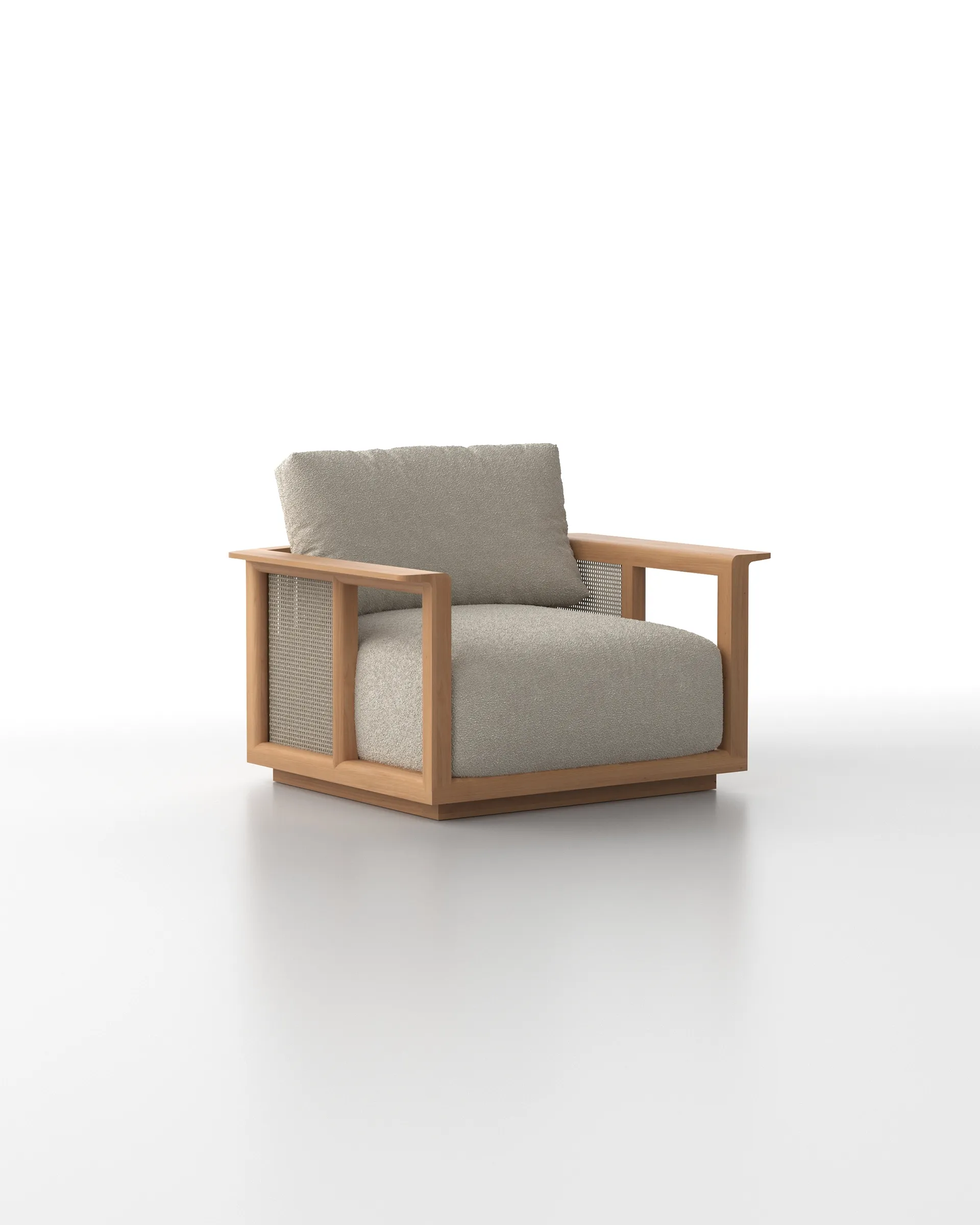
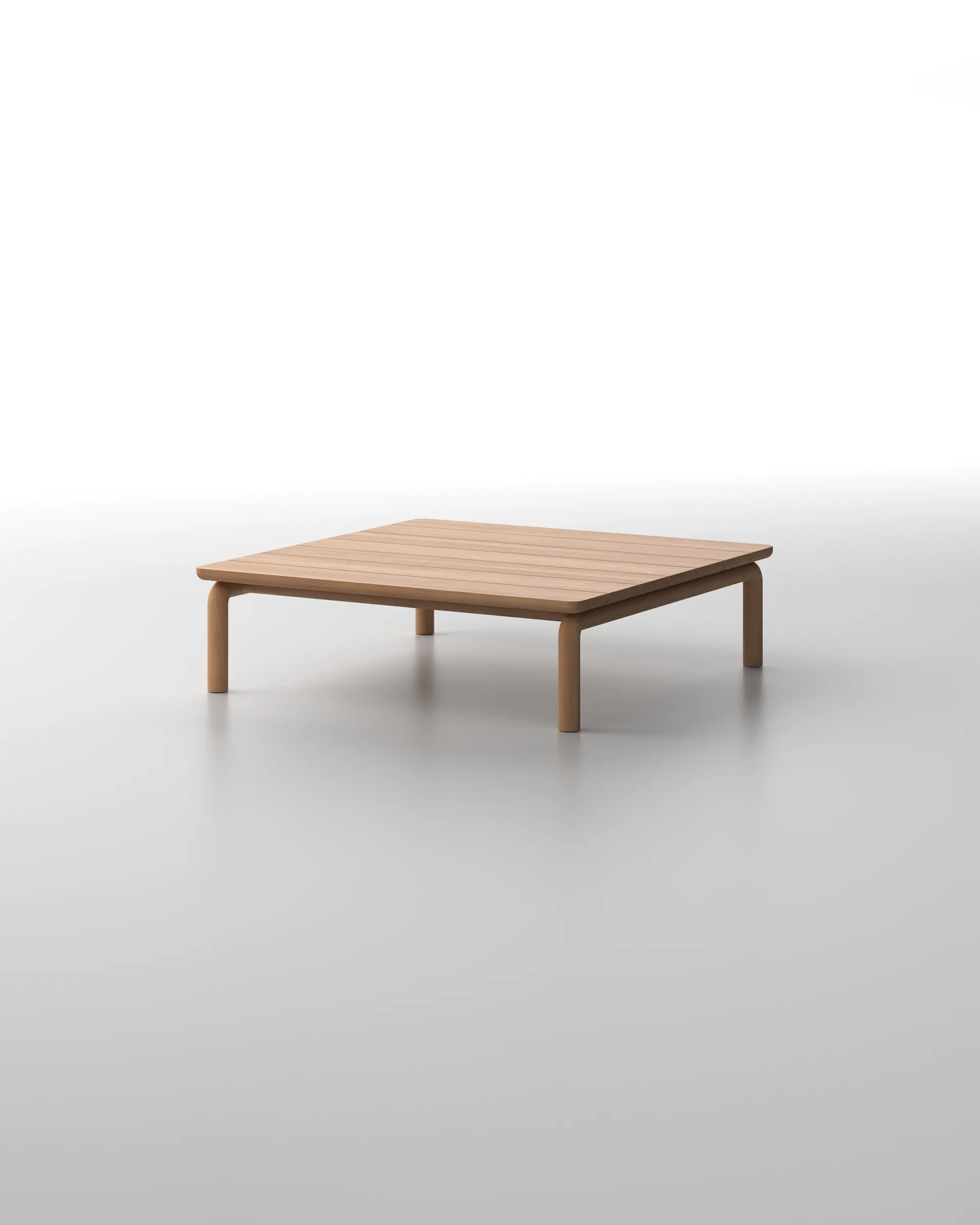
Search for advice on outdoor furniture covers and you will find every possible position argued with equal confidence. Cover it always. Never cover it at all. Cover it occasionally, or only through the harshest months. So which of them is right?
Before you follow any of it, check what it was written for. A softwood bench, an untreated metal frame, and solid teak do not face the same risks, and they do not ask for the same care. Guidance built around one material tells you very little about another, which is why so much of it appears to contradict itself.
This guide is about teak, and where a cover actually earns its place.
Does Teak Furniture Actually Need Covering?
No. Teak does not need a cover to survive the weather. Its natural oils and dense grain make it rated very durable for decay resistance, which is why shipbuilders have used it on decks for centuries. That same chemistry holds off fungal growth and mildew. Rain, snow, frost, and sun will not damage well-made teak furniture left outdoors year-round.
What the weather does change is color. Out in the open, teak shifts from warm honey to a soft silver-gray over roughly six to twelve months, depending on how much sun and rain it receives. This is the surface weathering, not the wood breaking down. The same wood ages differently indoors than it does outside, yet in either setting its strength, structure, and lifespan remain intact. Many designers specify teak precisely because of where its color is headed.
So the question is not whether your teak will survive uncovered. It will. The question is what else is out there with it, and when even teak could use some help.
What Actually Needs Protection (And What Doesn’t)
If the teak looks after itself, protection becomes a question of what cannot.
Cushions and Fabric
Cushions are the reason most people reach for a cover, and they are right to.
Quality outdoor cushions are built for weather, with quick-dry foam that lets water pass through and performance fabric that resists fading and moisture. That is very different from being immune to it. Foam that stays saturated for days, with no chance to dry, will eventually grow mildew. Warm humidity speeds the process along, but a cold, damp autumn arrives at the same place.
If your cushions have already reached that point, our guide to removing mold from outdoor cushions covers the method and the mistakes to avoid. And if you are still deciding which cushions belong where, our guide to every outdoor cushion type explains what each one is built to do.
Keeping the Golden Tone
Not everyone wants the silver. If the honey color is the reason you chose teak, the weather is working against you. Water and UV drive the silvering, and repeated soaking accelerates it, particularly on horizontal surfaces like tabletops and armrests where water pools.
This is where a cover does real work. Sealer alone slows the change, but covering the furniture through a wet season or a long winter extends the interval between applications considerably. You are not protecting the wood here. You are protecting a color you have chosen to keep.
Aluminum, Salt, and Grit
Teak is rarely the only material on a piece, and on some collections it is not the material at all. Aluminum frames, stainless fittings, screws, and hinges live in the same weather, and salt changes the math.
Powder-coated aluminum is built for outdoor use and holds up well. Even so, salt collects on surfaces and around fixings, and combined with constant moisture it works away at hardware over time. This applies to beachfront properties in the tropics as much as to city terraces where de-icing salt gets tracked around all winter. Rinsing with fresh water is the first line of defense. For furniture that sits exposed and goes unused for weeks, a cover reduces how much settles on it in the first place.
When a Cover Genuinely Makes Sense
A cover is a tool, not a rule. It earns its place in four situations.
Winter, in freezing climates. The strongest case on the list. Teak survives frost and snow, but freeze-thaw cycles are the one condition where moisture does more than change the color: water works into the surface grain, freezes, expands, and repeats, night after night, and over many seasons can raise the grain or open fine checks. A cover removes most of that water before the cycle starts.
A long rainy season. Not one storm, but weeks of near-daily rain where nothing gets a chance to dry. This is where cushions suffer and golden teak fades fastest.
A property left unused. For villas, resorts, and second homes, furniture sits through a closed season with nobody rinsing or drying anything. Covers keep the accumulation down and make reopening a much shorter job.
Furniture out of rotation. A terrace you skip in the cold months collects dust, leaf litter, and bird droppings. That is a cleaning problem more than a weather one, and covers it well.
Notice what is missing: everyday weather on furniture you actually use. Cover it, uncover it, cover it again, and you create more work than the weather ever would.
Covers Designed With the Furniture
If any of those situations sound like yours, the next question is what to put on the furniture. Most covers are bought separately and sized by guesswork, for a piece the maker has never seen.
At Otazen, the raincover is not an accessory you look for afterwards. It is part of the product configuration, considered alongside the teak, the fabric, and the foam, then shaped to the exact piece it protects. When you configure a sofa, the cover is already among your choices.
You can leave it out, and plenty of people do. But it is cut for that specific piece, and a cover chosen with the furniture will fit in a way a later one rarely does.
Fit is only part of it. The material matters just as much, whichever cover you end up with.
Choosing a Cover That Works
A bad cover is worse than no cover, and it comes down to air. Teak releases and absorbs moisture with the weather around it. Seal it under airtight plastic and you hold damp against wood that would have dried on its own by the afternoon.
Four things matter:
Breathable, not sealed. A fully waterproof cover with no airflow traps humidity underneath: a greenhouse in the tropics, condensation in the cold. Solution-dyed acrylics and coated woven polyester shed water while letting vapor escape.
UV-resistant. Sun turns cheap covers stiff and brittle within a season, and they shed fragments onto the furniture they were meant to protect.
Tear-resistant, with sealed seams. Wind finds weak stitching. Once a cover splits, water gets in and stays.
Fitted and vented. Too large and it flaps and collects standing water; too small and it leaves sections exposed. Look for a shaped fit that sheds water rather than pooling it.
One rule worth more than the rest: never cover furniture that is still wet. Trapping moisture with no airflow is how mildew starts, and it is the most common way a cover causes the problem it was bought to prevent.